
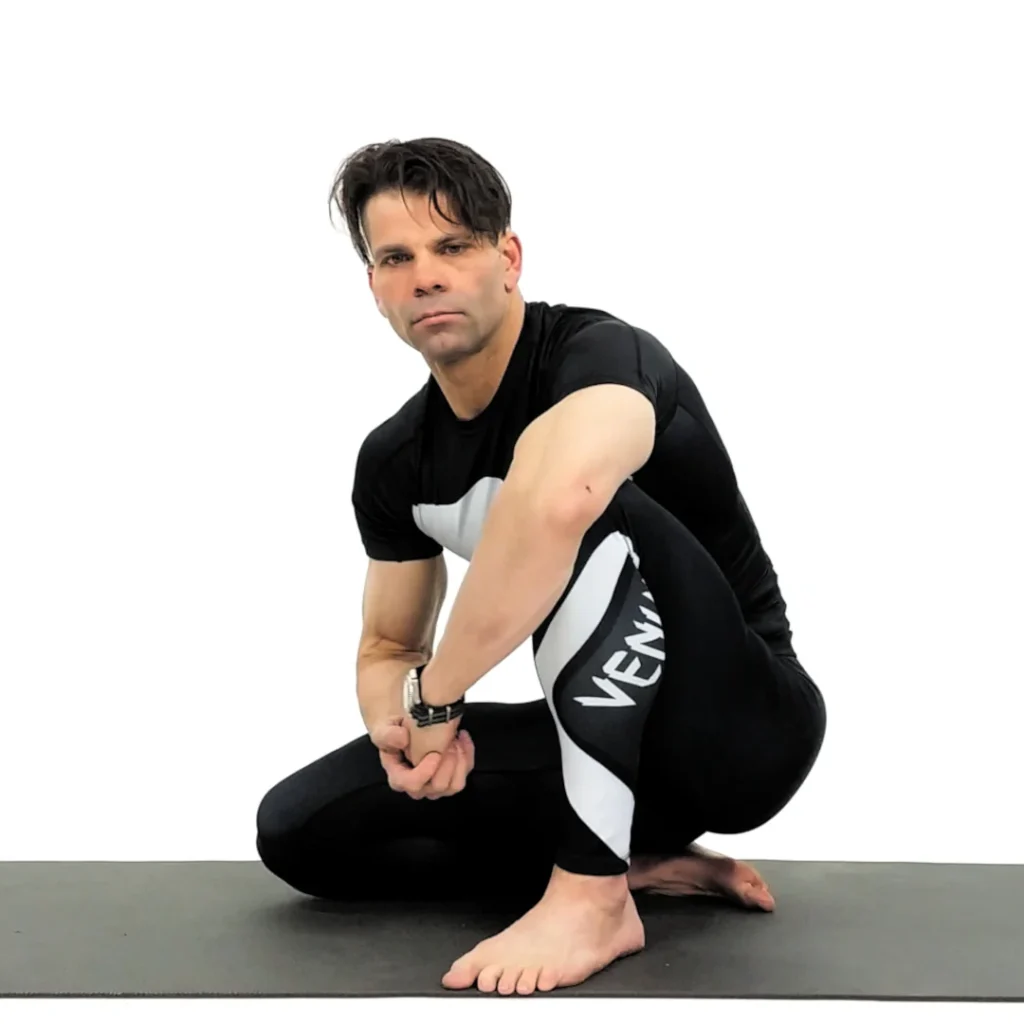
What Causes Neck and Back Pain
“Back pain should be explained, not explained away.”
Michael A Adams, PhD
As a physical therapist, every day I would see people with neck and back pain defined as non-specific (meaning no known cause). There were professional papers on it (even in 2026) suggesting it's "evidence-based" to be clueless. Which in a way is true, or was true, but only if you aren't aware, or accepting, of important chunks of evidence that have been emerging since at least the 1990s.
Patients I saw would come in with an X-ray or MRI report saying their spine was normal, despite pain that may have been there for years. Or they may be told their pain is due to muscle spasms or a strain, perhaps from lifting something heavy, or even something light, "just that one time."
However, that's almost never how it happens. Spine pain isn't magic. It doesn't come out of nowhere, nor is it usually the result of a single incident. Far more often, neck and back injuries come on gradually over time, however the pain from those injuries might in fact arise suddenly, seemingly without an apparent cause because the damage doesn't necessarily hurt at first. Also the activity that eventually hurts real bad is often a fairly normal activity that few are aware is damaging, and in fact usually isn't damaging unless you do too much of it.
And while the pain seems a mystery to both sufferers and caregivers alike, it's been well understood by spine biomechanics researchers for a considerable time. The big breakthrough was by M.D. and researcher Stuart Gordon in 1991 when it was first discovered how to herniate a disc in a lab. Despite the info being decades old, health care professionals of many disciplines are still taught to speak as if spine pain is as mysterious as the Big Bang, and treatment might as well be whatever feels good, because it's fashionable in some circles to think of spine pain as an anxiety disorder (I kid you not).
Alternatively, an x-ray or MRI report may describe things like bulged or herniated discs, disc degeneration (DD), stenosis, etc. These findings are sometimes said to be the cause of pain. Which is not untrue. A herniated disc likely does cause a lot of back pain, but but the herniated disc is more a symptom than a cause. What caused the herniation? There might be muscle spasms but what's causing those?
Patients haven't been told the answers, and it's because most clinicians—including most spine specialists—don't know, nor does AI, last time I checked (I guess there are limits).
However, if it's your spine, wouldn't you want to know the reasons:
- Why it hurts
- Why the muscles feel tight, or spasm
- Why the discs bulge
- Why do discs herniate
- What gives you arthritis, stenosis, etc.?
I sure would. And for starters, I think I'd endeavor to do less of those things. Which is in my mind is the most important part—say, part-1, of SpineFITyoga's 3-part best practice for curing neck and back pain.
Elsewhere, I'll teach the other two parts, but here, I'm making it clear that the #1 solution to spine pain is to understand what causes it and do less of that. Parts-2 and 3 will make more sense when the causes are known. The causes aren't even that complicated. The anatomical terms can be a lot to learn, but I'll try to explain them succinctly as I go, and it's worth knowing some of them.
The findings aren't controversial, but rather so buried in a haystack of other research findings that clinicians have to get lucky to happen upon them. And then they need to be discerning enough to know what they just found, and that's half the problem. If you are a healthcare provider you need willing to incorporate them, even if it goes against your training and how you generally get paid, the techniques of which usually originated before 1991, before it understood how disc herniate. The latter being the other half of the problem. However, if you are the sufferer, you should not be so encumbered, however, likely you will have absorbed a lot of it through the ether. Anyway, I'm here to help.
So, if you are a traditional practitioner, you might not want to hear it, and you might not want your patients to hear it, but here are the causes and what happens in the overwhelming incidence of spine damage and resultant pain, first explained short and simple, and later in detail for those who think it might not be true.
Simply put, what you need to know (TL;DR)
Ten crucial points about spine pain
1. Spine flexion (forward bending or stretching), a normal everyday movement, when taken too far, held too long, or done too often is the #1 cause of neck and back pain.
Examples of neck flexion:
- Looking down at your phone, laptop, book, or to do dishes
- Looking down at a desk as you write
- Shoulder stands in stretch-based yoga
- Looking down to watch your step when hiking, particularly downhill (this probably gets worse the fitter you are, as you'll be inclined to hike further and longer)
- Stretching the neck forward, as therapist teach (thus making your look down) to "restore normal range of motion"
Examples of back flexion:
- Bending forward through your waist to touch your toes, tie your shoes, garden, or do a forward fold in stretch-based yoga.
- Sitting slouched, such that you are unbeknownst bent forward at your waist … for hours.
- Squatting so deep that you round your low back as your hips tuck under
- Aerodynamically riding a bicycle, bending through your waist, for your entire ride.
- Crunches, sit-ups, and posterior pelvic tilts, bending through your waist, for a bunch of reps.
- Lying on your back and pulling your knees to your chest, such that you bend at your waist, seeminly as a treatment to cure damage unknowingly caused by the above. (Riddle me that.)
And yes, I know that some of these things are thought to make neck and back pain better. Well, no. And you might notice that some proposed helps have something in common with what many may have experienced making them feel worse. We could call that a third half of the problem.
2. Too much spine flexion stretches the collagenous tissues (ligaments and discs) toward the rear of the spine, causing damage, micro-failure (microscopic failure of the ropelike collagen molecules) at first, and resultant pain and inflammation.
The body often reacts with muscle guarding, then spasms, to brace and prevent more flexion. The muscle spasms associated with the pain are often taken as the cause of the pain, and when "stretched out" to relieve the pain or restore normal motion, are thus stretched in the same direction that caused the injury in the first place.
3. Other ordinary spine motions (extension, twists, and side bends) and stresses (compression) can also be overdone. But when combined, or alternated, with flexion, they all become particularly damaging.
4. If excessive flexion continues, micro-failure (microscopic breakdown of collagen molecules) becomes macro-failure, often in the form of rearward bulged and later herniated discs, finally visible, which can hurt in and of themselves and also pinch upon nerves causing pain, numbness, or muscle weakness that can refer down an arm (in the case of the neck) or the leg (in the case of the low back).
5. A herniated disc is literally deflated and shows up on an x-ray as degenerated (thin). The thin disc puts the ligaments spanning its distance on slack, resulting in instability. Literally ligaments that are too loose, so the last thing they need is more stretching.
6. Over time, if the segment is not stabilized by muscle, the body will stabilize it with more bone, by growing osteophytes (bone spurs) that permanently lessen vertebral range of motion.
The bone formation can further pinch nerves, causing increased pain, tingling, and muscle weakness.
7. The combination of decreased disc height, disc bulges, herniations, and bone formation narrows the central and/or lateral foramen (canal) of the vertebrae, impinging spinal nerves or the cord itself in what is called stenosis.
If bad enough, the stenosis-induced nerve impingement can result in pain, muscle weakness, numbness, and tingling affecting the arms or legs.
8. Advanced stenosis can result in permanent pain and disability for which even the best exercise programs, drugs, and surgery are powerless to fully correct.
9. The above has been referred to as the degenerative cascade.
If you catch it early enough the body can fully heal itself and restore full function, and the good news is, you usually have years to catch it. Catch it towards the middle, and you can heal a lot, be pain-free, but will want to be extra mindful as you're prone to easier reinjury. Not stopping at all, or stopping late in the cascade, and now you are more "managing a condition" and likely not looking at full recovery. Surgery might be indicated, also for which, "full recovery" is unlikely.
Needing surgery, I think, is almost always a failure of earlier treatment. You might get sent to a surgeon, they'll say do therapy, aka, conservative treatment, first. Therapy is usually a mixed bag of things that might help a little, some that don't help at all (beyond placebo), and some stretches on top that likely make you worse. Conservative treatment fails, you go back to the doctor, and now you get your surgery, more therapy, more stretches… It's actually a pretty good profit machine, and almost everyone means well. As they say:
"It is difficult to get a man to understand something, when his salary depends upon his not understanding it."
—Upton Sinclair
10. SpineFITyoga for spine pain is about teaching what damages the spine (here) and practicing proper spine alignment 5 minutes per day (P5) for a time and then building total body fitness 5 minutes per day (S5) in a spine-healthy way to allow the body to heal and best reverse, stop, or mitigate further damage. S5 implicitly carries forward the neutral-spine emphasis, implicitly taught in P5, but in addition produces substantial, visible, ongoing fitness gains, with a short daily time commitment. So hopefully, you'll want to keep it up indefinitely, for reasons fully unrelated to spine pain.
Better-than-clinical spine rehab AND total-body fitness, Guaranteed
- The Time: 5 minutes a day. > Master a neutral spine with Posture-5, then build lifelong, total-body conditioning with System-5. No BS, just dialed-in exercise.
- The Cost: $49 per year. > Full access for less than the cost of 1-2 physical therapy co-pays.
- The 40-Day Guarantee. I'm aware 5 minutes sounds bogus, likely no-stretch does too. So if your pain isn't decreasing and your fitness isn't improving within 40 days, I'll refund you in full.
All the above in depth
Spine Flexion (excessive)
Excessive spine flexion (forward bending of the back or neck, think Flexion Forward) is by far the most common way people injure their spines. In so doing, they stretch out the collagenous tissues (ligaments and outer discs, composed of collagen, a fibrous rope-like molecule). These tissues are often innervated by nerve fibers that detect damaging stretch and trigger a reflex to increase muscle guarding (a protective neuromuscular reflex) of the neck or back muscles to stop you from overstretching. Stretch-based yoga, for some reason thinks overcoming this protective reflex brings enlightenment. Let's just say, not only is that not often, it's not even true to the origins of yoga, but I digress.
If the stretch continues, micro-failure (microscopic damage) of the collagenous tissues occurs. The disrupted collagen attracts inflammatory cells to repair the torn tissues, resulting in what's likely still minor pain, but with guarding being more prolonged and progressing into spasms (again to protect the spine and resist further flexion). Tests indicate spasms peak roughly 5-7 hours after the injury, which because of the delay, I have to think only makes it less intuitive as to what brought them on. The spasms can do an impressive job of increasing spine stiffness, allowing time for the discs and ligaments to heal, or would if people didn't feel the need to stretch them.
Damage at this point is still micro-failure, and won't show up on an X-ray. And because there was no known incident that caused the pain, it is often diagnosed as non-specific.
Nonetheless, the injury is real and the mechanism was absolutely specific. It was just a long time coming, often decades, and when it arrived, it was after doing a motion, stretch, lift, or posture (or all four) many thousands of times that hitherto wasn't a problem, so seems mysterious.
Bulged and herniated discs & spine flexion
If the above cycle continues, pain may come and go. Over time, continued flexion squishes the front of the disc (I like to envision the disc as a jelly donut, with a gel center and tough outer shell), while simultaneously stretching apart its back. The disc nucleus (its gel-filled center) is then forced rearward, working/squeezing its way through the annulus (the tough collagen-constructed outer ring surrounding the nucleus) fibers. The inner portion of the annulus has no nerve supply but the outer 25% does. Once the nucleus works its way to those nerves it likely hurts more. But the first 75% of the damage might not hurt at all. And when the nucleus starts to bulge outside the normal circumference of a disc, there's your bulged disc that will now show up on an MRI.
At least now your pain is not non-specific anymore, and you have a visible (with an MRI, but not yet an x-ray) reason for the pain. But it's the same specific flexion force that's been causing it all along. If continued, the same (flexion) causes the nucleus to spurt through the final outer layers of the annulus, and there's your herniated disc. Just like a jelly donut where you squish the front, and the jelly squirts out the back.
Disc herniations are often highly inflammatory, highly painful affairs. The extruded material sometimes presses on, or associated chemical inflammation, affects big nerves now. Nerves that go down the arm (if the herniation is in your neck) or leg (if it's in your low back), causing is some combination of pain, muscle weakness, numbness, and tingling. While the final breach often happens all of a sudden, the bulk of the damage happened a little at a time, over years, until the last straw finally broke the camel's back (not quite literally but close).
If it is your leg, there's your sciatica, for which a lesser therapist will blame a tight piriformis muscle and tell you to stretch it, along with your low back, and the damage continues. And if it irritates you they might say, "Sometimes it has to hurt more in the short run to get better in the long run." I know, I used to say that too.
A large herniation usually shows up readily on an MRI, and the deflated, flattened disc will now show up on an X-ray too, so there's your degenerated disc of the oft-diagnosed degenerative disc disease (DDD). Again, the pain is specific, but practitioners to this day are overwhelmingly baffled by the cause. Meanwhile spine biomechanists can not only herniate discs reliably in their labs, they can even steer it's direction, discovered way back in 2005.
At this point, all is not lost, and if the person makes good choices, there is still much that can be done. And the good news is the body usually reabsorbs the extruded disc material. However, as the ruptured disc deflates/flattens, it obviously shortens the space between the above and below vertebral bones. That shortening not so obviously slackens the ligaments that were connecting the two vertebrae, and without those ligaments holding as tight, vertebral instability is increased in all directions. So this is when the enhanced muscular stability provided by F5 comes in especially handy. And if you had it and P5 already, you probably prevented this stage, which is better.
The shorter disc also brings the facet joints (vertebral joints behind the discs and spinal cord) closer together, so they compress sooner and harder when you look up or otherwise bend the spine backward (extension), possibly resulting in arthritis, bone spurs, and osteophytes. Here we are entering late-stage spine degeneration. And the increased bone growth can be thought of as the body's best attempt to re-stabilize the damaged region. The arthritic changes can be painful in and of themselves, but the combination of lost disc height and increased bone formation narrows the vertebral canal (that the spinal cord runs down) and foramen (where the nerves exit the spine), called stenosis. The narrowing can then pinch the spinal cord or nerves exiting the spinal column. Which can then cause severe pain, weakness, numbness, tingling, and difficulty walking. Even standing with a neutral spine can be painful.
At this point, we are getting to where it might be too late for SpineFITyoga to do much good, and surgery is indicated, probably a joint fusion and laminectomy.
The good news is that it usually takes decades to get to this scenario. The bad news is many people get here anyway and have no idea how, with the blame falling on age, genetics, or that car accident decades ago, which are usually partial truths at best. However, if we follow the chain of events and recognize what is going on, we can see how it all happens from the beginning, and take steps to solve it. The rest of this page will discuss other forces that can damage the spine, but as you'll see they're usually most harmful with the flexion just discussed.
We are bipedal creatures, working on things with our hands in front of us, so flexion as described above, it the primary culprit. Evidenced by the fact that almost all disc herniations are to the back, some vertical, with disc herniation in a forward direction rare indeed. However, below I'll add detail regarding the other forces, both by themselves and how they interact with flexion.
Compression (excessive):
Compression (when the discs are squished or compressed from top to bottom), one would think that compressive stress is particularly pathological. With weightlifters snapping up their spines all the time with the extreme loads they lift. But in general, the spine holds up well to compression, or at least compression with a neutral spine (the ideal, least-stress spine posture, neither in flexion, nor extension, with a normal S-curve as seen from the side when standing).
In fact, without compression stresses, the spine will lose bone mineral density and become osteoporotic. It is because of intermittent compressive stresses that weightlifters and gymnasts have some of the densest, strongest bones. Offering considerable protection against osteopenia and osteoporosis later in life.
However, compressive forces, if applied unevenly, suddenly, or too forcefully without your body having had time to adapt and strengthen, can and does cause damage, which on an MRI might show up as a Schmorl's node.
A Schmorl's node (a vertical disc herniation) is where instead of the nuclear gel of the disc working its way rearward, as seen with spine flexion, it breaks through the end plate (the fibrocartilage interface between the top and bottom of the disc to the bone above and below).
Schmorl's nodes occur most frequently where the lumbar (lower back) and thoracic (middle back) come together. Likely because the thoracic spine is buttressed against rotation by the ribs above this point, and the lumbar spine is stronger at resisting rotation. The collagen fibers of the annulus are cross hatched in many concentric layers such that rotation in one direction winds half of them tight, and twisting the other direction winds tight the other half, both ways increasing compression. And it's this compression, not the rotation itself, that forces the nucleus through the end plate directly into the bone above or below it.
Other likely cause of Schmorl's nodes would be a sudden and sharp compressive load. For example, hitting a large bump on a motorcycle or ATV when seated, where rather than soaking up the stress through your legs, that sharp compressive stress went directly through the spine. A fall onto one's tailbone can do the same. Even for Schmorl's nodes a neutral spine is protective while a flexed spine combined with flexion is weaker.
Too much compression, especially when combined with (you guessed it) flexion, increases the risk of vertebral body fractures, particularly if the person has lesser bone density, resulting in the Dowager's hump most often seen in elderly women. On the other hand, compression with extension really loads up the facet joints and can fracture the pars interarticularis (bone region towards the back of the vertebra), which can later result in the condition of spondylolisthesis (an unstable condition where one vertebra slips forward on another) most often seen in gymnasts.
Workplace vibration often shows up in occupational research as a top risk factor for spine degeneration. The vibration they are referring to is usually road vibration from driving or piloting helicopters, so it perhaps can be thought of as long-term repeated micro-compressive stress. Spine damage resulting from vibration has been difficult to sort out from the damage induced by prolonged semi-flexed seating positions that often accompany it. However, research does show vibration exposure to be an additional factor that can accelerate already established partial herniations, and when combined with flexion, causes disruption and delamination of the annulus collagen fibers, resulting in outward migration of the nucleus.
So in short, spine compression in and of itself usually is not a problem and to some degree is a solution. However, compression when combined with other motions (flexion, extension, twisting) is where you run into problems. Such that if you are going to lift something heavy, or lift something many times, you really want to do it with a neutral spine. And if you are going to spend a long time in a position, you really want that position to be neutral.
Spine Extension
Spine extension (bending backward or looking upward)—like a sphinx, cobra, or looking overhead—is a little more tricky. If the spine is otherwise healthy, mild to moderate spine extension stretches can be a welcome break from long periods of flexion. Personally, I prefer avoiding long periods of flexion from the start, rather than hoping to "sort of" fix things later. However, to put extension damage into context, we need to discuss the continuum from potential help to certain harm.
In the 1980s, Robin McKenzie (founder of the popular McKenzie method for neck and back pain) theorized that if spine flexion herniated discs posteriorly, then spine extension would push that disc material forward again. There was no research testing whether this actually worked until 2009, when Scannell and Dr. Stuart McGill confirmed that after repeated spinal flexion caused a partial posterior disc herniation, an immediate follow-up of repeated spine extension sometimes helped return disc material back to the center.
However, there were massive caveats to that study. First, the extension stretches only worked about half the time. If the flexion damage had already caused the discs to lose more than 30% of their height, repeated extension didn't work—the disc was already too damaged. Also, in order for the disc material to move backward in the first place, there had to be damage or a tear to the posterior annulus fibers. Just pushing the nucleus back to the front with extension did not heal that annulus damage, which would likely take months in living tissue. It’s like if the barn door opened and the horses escaped; throwing them back inside isn’t likely to do much good if you can’t figure out how to close the door.
I corresponded with Dr. McGill after reading his paper and asked if he was now advocating McKenzie stretches as part of his routine. He said not really, noting the potential that repeated spine extension exercises (like the floppy push-up) could start damaging the facet joints, possibly causing arthritic changes down the road. Instead, he suggested having the person rest in a prone position propped up on their elbows (sphinx pose in yoga) or just prone with two fists under the chin for about 10 minutes. The idea is that a sustained extension stretch might help work the disc material forward, minus the repeated impact to the facet joints induced by end-range extension reps.
McGill’s group followed up that study with another in 2012. They wondered: if spine flexion herniated a disc backward, and extension pushed it forward, would alternating each flexion stretch with an immediate extension stretch offset the damage? Rather than help, they found alternating extension with flexion actually made the discs herniate 53% faster. Apparently, the discs act more like a wire coat hanger, where bending the wire back and forth does not negate damage; it is one of the surest ways to get the wire to break.
So, quickly alternating between a downward and upward-facing dog, or repeated sun salutations, are likely not ideal if you have disc problems. Reading this research is what got me to trust McGill’s group. They weren’t trying to prove an ideology; they were just testing physical realities to learn what happens, and then applying that data to help people.
Aggressive extension stretches, particularly if painful, should always be avoided. The reasons are as follows:
- Extension increases compressive stress through the facet joints of the vertebra. If the spine is otherwise healthy, most people do not extend enough during daily activities for this to be problematic. However, if your job requires looking up repeatedly or for long periods (like a tree trimmer or electrical lineman), extension might become too much. This is especially true if the discs have degenerated (likely due to too much flexion), both reducing stability and bringing the facet joints closer together. In this state, even modest extension becomes problematic.
- If a disc has bulged or herniated posteriorly, that disc material and the ensuing inflammatory response take up space in the canal through which the spinal cord and nerves travel. Extension further decreases that space, which can cause increased pain, numbness, and tingling going down the arms (neck issue) or legs (low back).
- If the spine is beaten up enough, with significant osteophytes (arthritic bone spurs), the nerve space is already compromised. Extension can exacerbate compressive nerve pain. In the neck, these same changes can decrease blood vessel space, causing one to get dizzy or even lose consciousness when looking up.
- Even in a healthy spine, aggressive back extension exercises—particularly with impact, as seen in gymnastics, cheerleading, or American football—can result in stress fractures of the pars interarticularis (the bone segment joining the facet joints). With considerable core strength, athletes often train through these fractures without knowing they are present. However, if improperly healed, these fractures can allow the upper vertebrae to slip forward on the lower—spondylolisthesis—resulting in pain and disability later in life.
All the above processes make aggressive spine extension stretches a liability. If the spine has enough degeneration, even mild extension past neutral might do more harm than good. With severe degeneration and bone formation resulting in considerable stenosis, just standing up straight with a neutral spine can impinge nerves.
You can bounce back from a fair amount of spine injury and still lead a normal, pain-free life. However, once we cross the point of no return into advanced degenerative changes, even the best exercise programs (i.e., SpineFITyoga) have limited recovery potential. Spine flexion and extension range of motion is about maintaining a balance—but think of it like balancing on a tightrope, even a slackline, but not a teeter-totter.
Spine Rotation/Twisting & Torque
Unlike flexion, spine twisting and rotational stress are not often a massive problem in and of themselves. The neck is structurally designed to rotate so we can look around, while the thoracic and lumbar spine allows for smaller amounts of twisting that are generally harmless. Modern life usually doesn’t park our spines in rotation for hours the way it does in flexion.
Still, if taken too far, rotation stretches are reliable pain generators. The annulus is made up of concentric layers of collagen fibers alternately crosshatched at roughly 60 degrees. This crosshatching resists overstretching in either direction. However, rotation stretching aggressively tensions every other layer of these fibers, resulting in two mechanical failures:
First the tension imparted to those fibers increases compressive pressure on the nucleus, increasing the risk for end-plate injuries (like the Schmorl’s nodes mentioned earlier).
Second, while half the annulus layers are stretched tight, the other half (positioned in the opposite direction) are forced into slack. If repeated enough, this causes delamination (separation of the annular layers). This is a big problem when rotation is combined with flexion, as it more than doubles the rate at which discs herniate compared to flexion alone.
So, if you have back pain, lying on your back doing knee-to-chest flexion stretches followed by rotating your hips side-to-side is a terrible idea. In the neck, poor posture (flexion) physically interacts with twisting to limit your rotational range of motion, making it harder and more stressful to simply turn your head to check a blind spot while driving.
Side Bending
Side bending generally doesn’t cause a problems on its own. Few people herniate a disc entirely to the side, and few sports or occupations put you in a position to cause such isolated damage.
However, side bending, when combined with flexion, steers the exact direction of the herniation. Spine flexion combined with side bending to the right will push the nucleus in the opposite direction of the bend, causing a herniation to the back-left. Thus, spine flexion is the main driver of the herniation, with lateral bending steering it. For example, a roofer who continuously sprays tar with a heavy gun over his right shoulder (forward/right lean) will reliably produce a back-left disc bulge.
Conclusion: not a condition but a continuum
Basic spine pain is not a classification; it is a continuum. If you view your pain through the lens of biomechanics, forces, and rates of healing, it's no big mystery, and the way forward is clear.
First, understanding what stretches, forces, and posture cause injury, you understand exactly why certain movements are irritating and why avoiding them allows the system to heal. So you can do less of that, and moreover not do more of the same (stretching) as an attempted fix. If you have read through to here, you just did that.
Second, take what you just learned and practice it, enough to feel in your body when your spine is safe and neutral, or contorted and vulnerable/stressed. That's what SpineFITyoga's 5-minute P5 program teaches. That way if you are gardening, lifting, or sitting at your desk and your neck or back starts hurting (or it starts hurting about 7 hours after), you can be like, "oh, yeah, fix that, do less of that."
Third, either with or after enough P5 to get a feel for what's a neutral spine start F5, the 5-minute fitness system, to build total body strength and fitness, not to mention spine stabilization strength ever onwards. Which if rated by progress per minute exercises has to be better than anything, spine pain or no.
SpineFITyoga
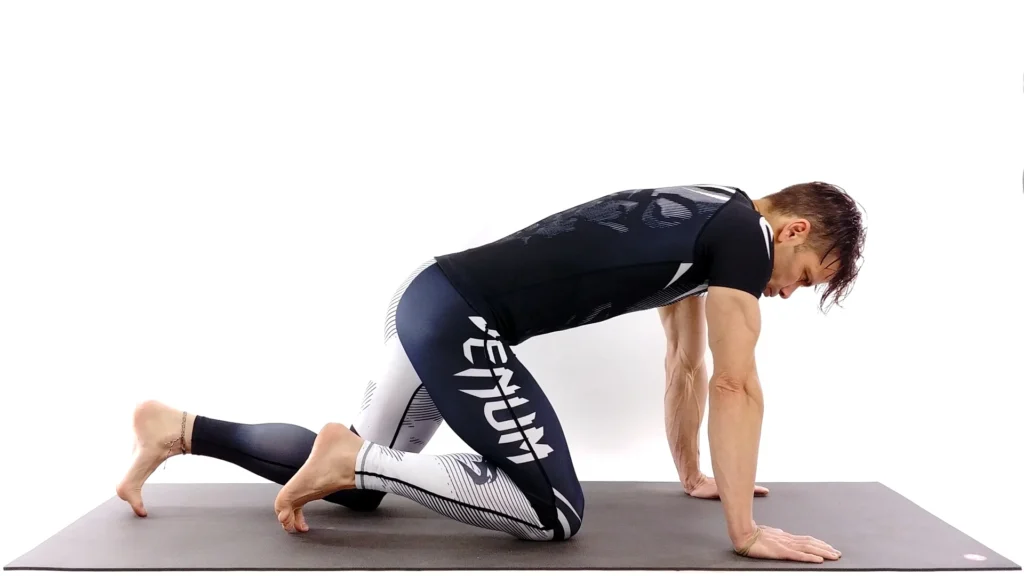
First self-paced NEUTRAL-SPINE YOGA for Spine Health AND Total Body Fitness
- Fast: 5-minute per day, home programs.
- Expert: Designed by a Physical Therapist with 20 years clinical experience.
- Guaranteed: Results in 40 Days or Your Money Back.
