
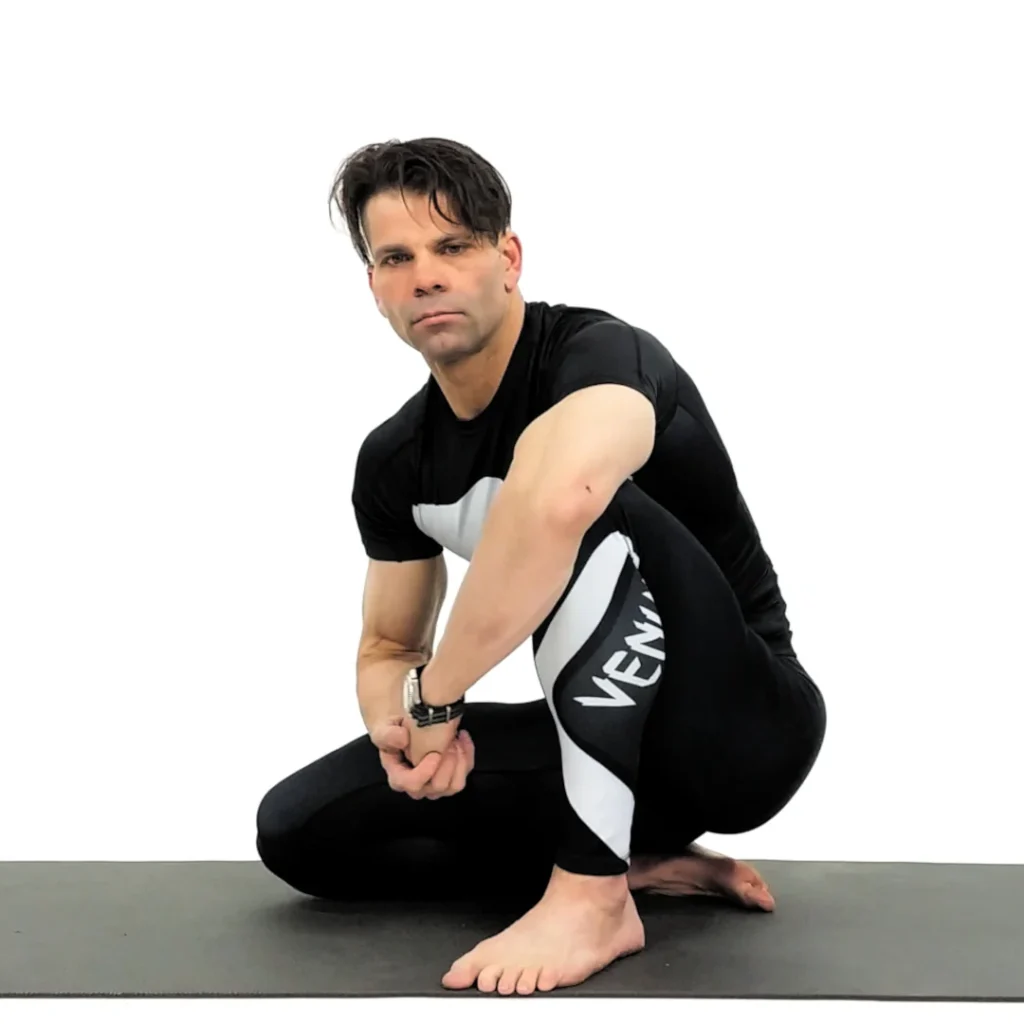
Spine Pain Protocol
First STRENGTH-FOCUSED, no-stretch, neutral-spine YOGA designed to fix back & neck pain AND build physique & fitness people want. Usually IN 5 MINUTES a day.
The spine pain I’m referring to
When referring to spine pain, be it neck or low back, I’m mostly referring to the most common type, estimated to be about 95% of cases. This is often referred to as:
- Chronic: usually meaning lasting longer than 12 weeks
- Chronic-intermittent: pain that comes and goes for longer than 12 weeks
- "Nonspecific": seemingly comes out of nowhere with no known, to the patient or evaluator, cause. I don’t like this term. But in my page What Causes Spine Pain, I'll go into detail about what causes this causeless pain and why so few people know about it.
- Mechanical: arises intrinsically from the spine (bone, ligament, disc, etc.) and is made better or worse by different “mechanical” movements, i.e., bending, stretching, lifting, twisting… all of which are BIG clues. This term is reasonable if not that specific, and treatment for it has been taken in some odd directions, but as a term I don't hate it.
- “Normal”: neck or back pain, for which some suggest you should just accept, and if you are worried about it, you're told it's some kind of anxiety disorder, I kid you not. I wouldn't say never, but it sure isn't my go-to explanation. Anxiety disorder aside, there is a definite normal type of neck and back pain that I'm addressing. But I would offer that it's more like a normal sprained ankle, which is an inversion injury, but not that it's normal to have a sprained ankle.
Spine pain I'm talking less about, but…
…still often, is various forms of acute neck or back pain, or some specific types of pain, for which ideal treatment might or might not be SpineFITyoga, at least immediately. Where it depends, but where you can learn more about where and why it might depend, again in What Causes Spine Pain and in Red Flags & Bad Timing.
So where SpineFITyoga is primarily directed at eliminating (in most cases all of the above) types of pain. If you are far down the degenerative cascade, we might have to settle for just improving or managing symptoms (we’ll discuss in detail all of that later).
Acute neck or back pain (usually meaning <6 weeks duration) and specific pain (of known cause). I just emphasize these less for the following reasons.
- There’s no challenge in it. Acute pain usually gets better on its own by doing nothing whatever. Entire industries are based on this happenstance (cough, chiropractic, cough, acupuncture, cough, various stretches).
It’s, however, well known in research that acute pain “usually” gets better by doing anything or nothing at all, and then whatever you did right before your almost inevitable recovery gets the credit. And what you’ll tell everyone about. And everyone has probably told you about. Anyway, I think I cure acute pain with the best of them, but still it’s a hollow victory. - If the acute pain is really bad, there’s likely an inflammatory component, which literally takes weeks to clear as you wait for various cells and chemicals to do their thing. During this time, there isn't a lot you can do to hurry things along, though there are a number of things that can delay healing. This inflammatory stage is what I refer to as Bad Timing, where very likely S5, and sometimes even P5, will be aggravating. And where you really want to give it a rest for a while, before trying to actively make things better. Think yin and yang, with bad timing being the yin part.
This is a fantastic time to passively make things better and study the neck and low back pain causes so that you can truly rest it, and not make it worse with some types of rest (for example slouched sitting) or "passive" stretches. And while I just used the term yin, this is not to be confused with "yin yoga" or "restorative yoga," both of which in my mind are orthopedic nightmares. For which you'll learn exactly why in What Causes Spine Pain.
This is also a good time to read over the USER RULES, particularly rule-6, so you’ll know best practices on when to stop or continue an exercise when you feel ready to begin. Reading about Posture-5 and Levels 1 and 2 of System-5 and watching the demonstration videos will give you some idea of what you are getting yourself into. - Sometimes acute spine pain might be such that it’s dangerous to do any exercise, SpineFITyoga included, like if you broke a bone, and one false move might result in paralysis. Spine pain could be cancer. These and other serious risks are covered with the Red Flags Questionnaire, taken directly from emergency room departments. Depending on how your pain came about these risks may or may not be remote, as explained in the same questionnaire. And while SpineFITyoga probably is good for you, cancer or no, forgoing seeing a real doctor, thinking a spine tumor is non-specific or mechanical back pain is almost certainly bad.
I think that covers most all the bases. So if spine pain (neck or back) is your reason for being here,
SpineFITyoga’s full protocol is as follows…
…given in the order I think is most sensible and low risk.
- Read Red Flags and Bad Timing. If you have urgent red flags, you want to read this first, plus it’s short.
- Read What Causes Spine Pain. A bit long but probably most important. But a lot shorter than reading Low Back Disorders by Stuart McGill, though highly recommended, I think it’s a bit overkill. And regrettably, I don’t like his laymen’s books as much. Where self-diagnosis and self-testing are still overcomplicated, especially considering he’s likely to be recommended the same three exercises, which won’t improve total body fitness hardly at all. Regarding neck pain, I can’t think of a comparable book, unfortunately, so you can either trust me on my assertions, or check my citations, which are more individual citations from peer-reviewed research. On the bright side for neck pain, anatomy, and physiology are overwhelmingly similar (though scaled down, and with increased mobility) to low back pain. And I've had very good results applying Stuart McGill-type principles/philosophy to my neck pain patients over the years.
- Read the USER RULES. Which are there to get you started safely, and inform you of various outs if things go wrong, before they go too wrong, without having to tank the program. The USER RULES are also there to prevent the opposite mistake, of being too cautious, such that you don’t get full benefit of P5 and especially S5.
- Do the Posture-5 (P5) routine(membership required). The 5-minute neutral spine posture practice program that gives you daily repeated practice and a feel for what’s the safest, most resting, and most stable spine posture (neutral). And ability to maintain that spine posture in otherwise different body positions. P5 is like riding a bike, in that once you get it, you more or less get it, and so you can stop doing it after perhaps a few weeks. And if I’m wrong and you do forget it, you can always bring it back on an as-needed basis. More about P5…
- Do the System-5 (S5) routine (membership required). S5 is more than a “workout” or “some exercises”; rather, S5 is a highly efficient, self-contained, extremely progressive, fitness system that just so happens to take the neutral spine and postural awareness you gained in P5 for granted. It also totals 5 minutes of exercise progressing from easy Level-1 (designed for the still injured and in some pain, to medium Level-2 (more or less basic fitness) to Level-3 Advanced, for which so far nobody has maxed all 9 goals, myself included. But I can dream. To be continued indefinitely. S5 is more use it, and continue to make gains and abs if you do it right (plus watch your diet), or lose it. Each exercise of each level is nigh infinitely subdivided by variations in form, speed, and rep count. Each with clear targets for when and how to progress with the USER RULES as continued guidance, and as very clear signals of whether you are improving or not. More about S5…
So there you have it.
SpineFITyoga
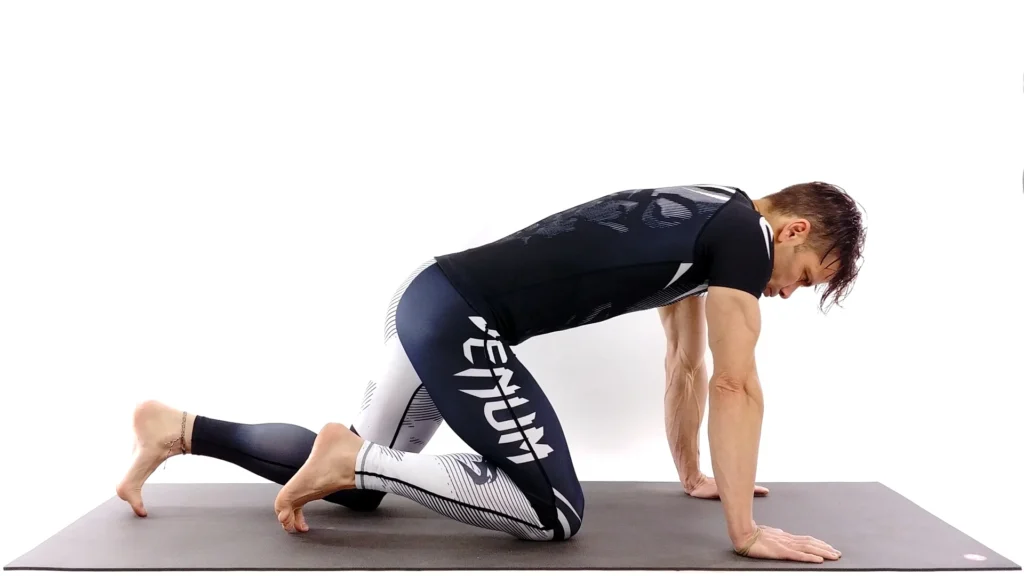
First self-paced NEUTRAL-SPINE YOGA for Spine Health AND Total Body Fitness
- Fast: 5-minute per day, home programs.
- Expert: Designed by a Physical Therapist with 20 years clinical experience.
- Guaranteed: Results in 40 Days or Your Money Back.
